My Basic Scenery Techniques: Vegetation, Ballast, and Relics of the Old Main Line.

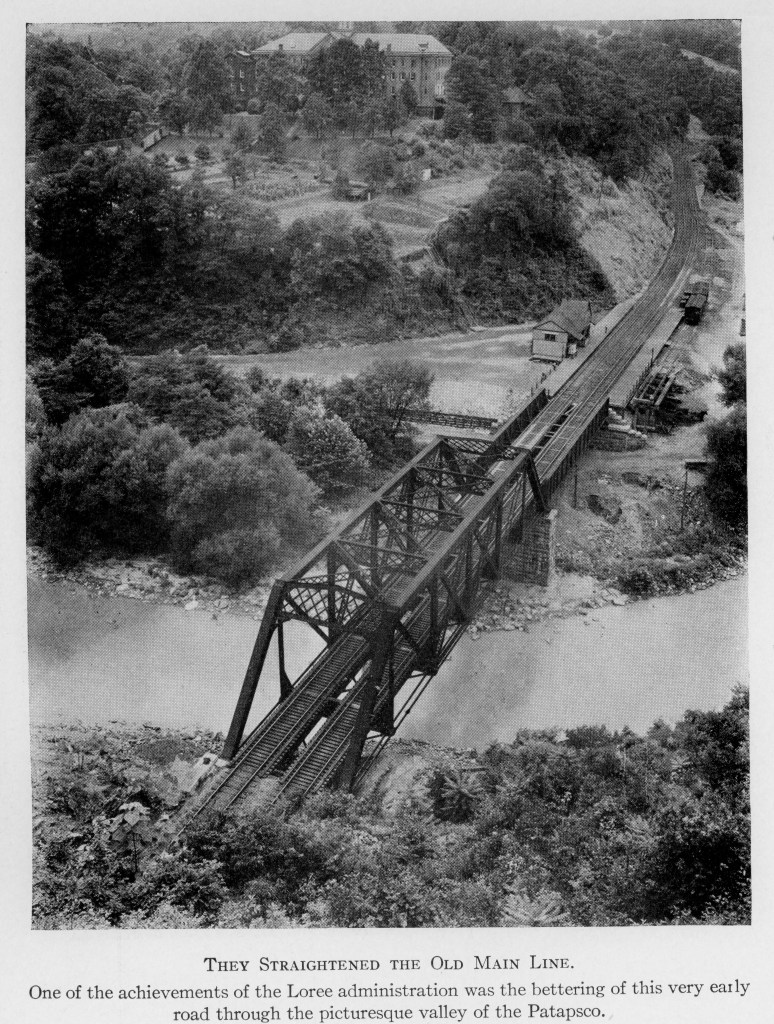
Some parts of the B&O Old Main Line (OML) remain and remind us that this was not always a shortcut to Baltimore from the west. It was built as a permanent structure to move freight from the middle of the country to its ports in its first 50 years of existence.

My layout is set in August of 1950 and I am trying hard to duplicate the look of that era. Cinders abounded and spread out along the right of way and there was an effort to catch up on deferred maintenance from the Second World War, which took its toll on the right of way. And even by 1950 the OML was still recovering.

On my first “TOMA module” of the Old Main Line, scenery shapes were formed with one and two inch insulating foam cut with a handheld drywall saw to create rough shapes. Messy, and I had to keep a shop-vac handy. I covered them with a Scluptomold mix, now often described as “Scenery Goop”. Not that I have anything to do with its current widespread use, but I have been using this since I was 12 years old. The owner of my local hobby shop recommended it for model armor dioramas and I thought it would be useful for model railroad scenery. At the time plaster and zip texturing was the conventional wisdom for layout scenery.

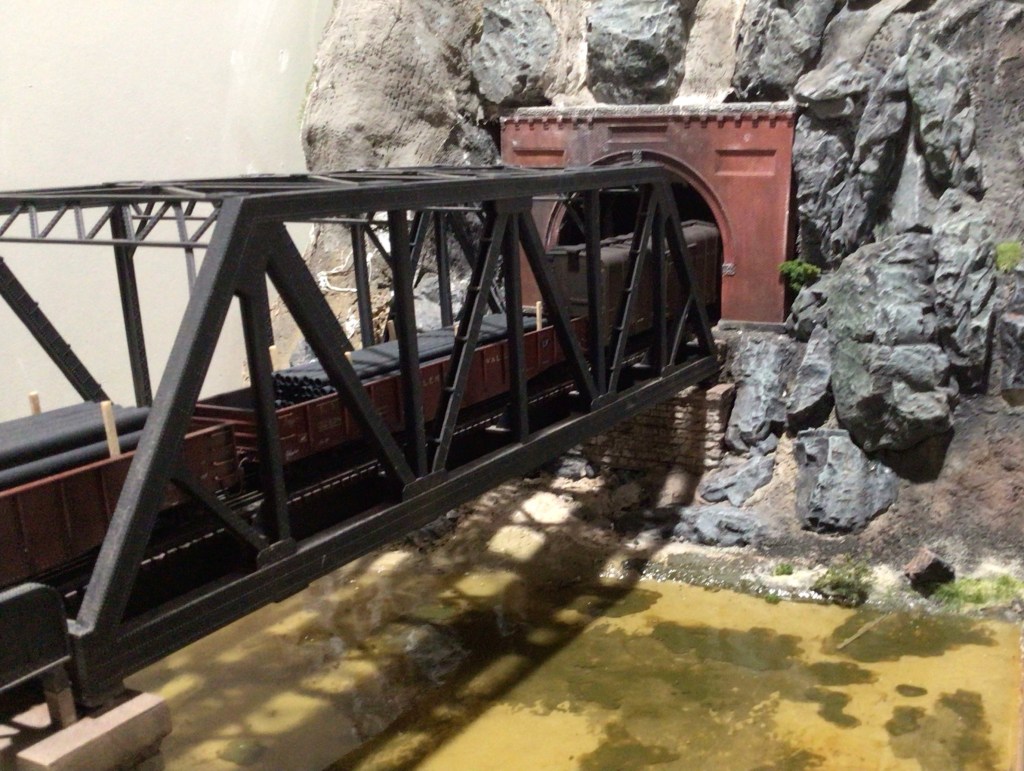
West Tunnel Portal of Ilchester Tunnel. More trees need to be added over the portal to complete the scene.

The tunnel portal on this first module has the classic or cliche train layout look of protruding rocks surrounding a tunnel opening. In this case it is the prototype. The Patapsco River flows east to the Baltimore harbor and hits this granite hill, then turns south, and goes around it leaving exposed rock and barely enough soil to support some trees. The railroad followed the river until early 1900s realignment and a tunnel was bored through the hill. To model this steep cliff face I used a variety of Woodland Scenics molds to cast sharp rock outcroppings to simulate the location. They were covered with black paint for a background, drybushed with light grey for highlight, then lightly over sprayed with a light green to simulate the moss that grows on them in the damp valleys of the US Piedmont. I tried to place them similar to the prototype and filled the area in between with goop, Woodland Scenics clumps, and parts of Scenery Express trees were added to simulate the trees that struggle to exist on rocky outcroppings.

The tunnel portal is a very accurate commercial product by Monroe Products (#151 Tunnel Portal Brick B&O style, Double Track) that replicates the brick tunnel portals the B&O used at multiple locations along the Old Main Line. It is a hydrocal casting that I stained with box store acrylic paints thinned with isopropyl alcohol.

The tunnel portal casting.
Ilchester Road, the Buick is headed north in the photo under the RR bridge. The Station and Freight House are to the left and the tunnel to the right. The bridge and tunnel are still there in 2023. The station and freight house are gone.

Ilchester Road appears to still have been a dusty, dirt road in 1950. I modeled it with light colored grout to match period photos and the unpaved areas that still exist in the area of the bridge. I added a thin layer of grout then treated it like ballast, with a covering of thinned water and white glue. I added tire tracks to the underlaying layer of sculptamold. The trees are actually curved away from the tracks as the cinders and debris would have kept them from growing too much closer to the tracks. They are Scenic Express trees I coated with various shades of medium and light greens to replicate trees that are still growing, near the end of a a hot, humid summer in Maryland. Late July and August have always meant 90 degree plus temps with 80% to 90% humidity and afternoon thunderstorms. Not great for some humans, but another growth season for vegetation. Having spent some winters in Pittsburgh when the B&O transferred my Dad, I alway love July and August for its hot weather.

Vegetation along the right of way is something I get to study almost every day. I live about 15 miles from the B&O’s Old Main Line and much closer to the PRR’s old Northern Central Railway line. They were constructed within a few years of each other, each following a river. One is still an active rail line, the other is a rail trail that starts 600 feet from my house. I try to walk 3 miles every day and I often ride my bicycle on the trail much further. Having worked on and more recently walked portions of the Old Main Line, I can attest that the vegetation is very similar.

Ilchester Station looking east. Circa 1945. Photographer Unknown.

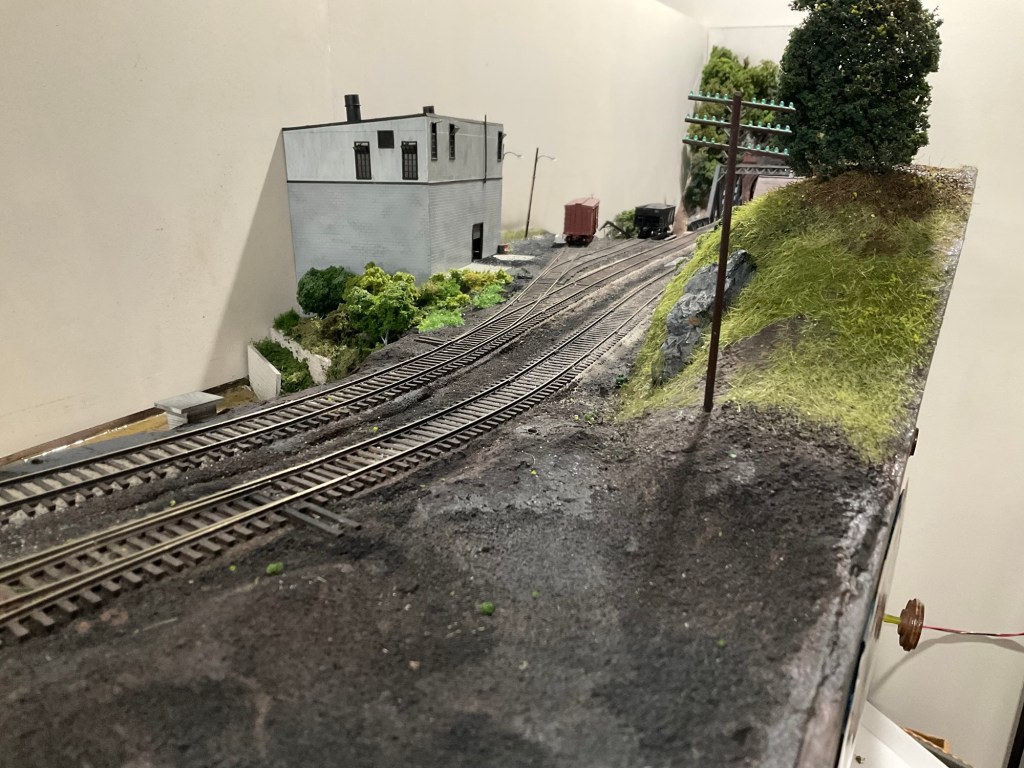
The steep bank to the right in the prototype photo above looks like it is covered with Woodlands Scenics ground foam. I see this everyday on the NCR Trail. It seems like a cop out to not use some new technique for scenery, but ground foam with some variations in size and color, along with some smaller trees actually seems to replicate this right of way well. Like the NCR right of way, the OML has large granite outcroppings. The are dark grey with lighter edges and often tinted green with moss and other organic coverings.

Looking east on the Old Main Line toward Ilchester station on the layout.

Ballast is another topic that is best covered in a brief way. When you’re a trackman on the railroad, ballast is part of the job. You learn how to make sure it is solid and on production gangs with big, mechanical ballast tamping machines. But back in the 80s, you still learned how to use a ballast fork to tamp a tie by hand. One guy on a lining bar to raise the tie and two guys, one on either side of the tie sliding their tamping forks under the sides of the tie to add ballast underneath until it was solid.

HO scale ballast is more decoration than function. One tries to replicate the amount of ballast present on different tracks to show usage or importance. Today, mainlines are often maintained by large machines to tamp and level track. In previous times this was often done by section gangs that were responsible for a certain distance of track. I got to work on a section gang a few times on the OML. Even in the 80s there was a lot of pride taken on the look of the mainline. I never saw anyone leave a stone on top of tie, it was cultural no-no. Something you just don’t do!!

The ballast I remember on the OML from the 80s looks like the ballast today and how it looked in color photos from the 1950s. It was white to very light grey limestone rocks, about 2 inches in diameter, very roughly. The rocks weren’t as big as my foot, nor were they as small as my finger nail. They were more like a rock that could fit in your hand with a closed fist. Older 1950s era photos show a similar maybe slightly smaller stone, but the color is seems consistent.

Another unique part of the OML are the old walls, stone ties, stringers, and bridge abutments found along the right of way, many not in use. In this modern photo (below) of the tracks between Ilchester and Ellicott City there is a retaining wall still doings it’s job, probably 100 to 175 years after it was built. I chose to add this to my layout to offer some respect to the men who built this line to Ellicott City back in the 1830’s. I used a Chooch product, 215-8250 to replicate the wall. It still needs some weathering to fit the scene and there is obviously a need for cinders and some vegetation.

Winter Photograph, March 11, 2018. Bruce D. Griffin photograph.
The unfinished scene on the layout, 2023
A flexible stone wall product.

I wanted to add more detail and photographs to this post, but that just means waiting longer to post something new. I will follow with photos of completed scenes. Thanks for taking a look.

Enter your email address to subscribe to this blog and receive notifications of new posts by email.

Ilchester, Maryland, Part Five; The Railroad Infrastructure. The Freight House.

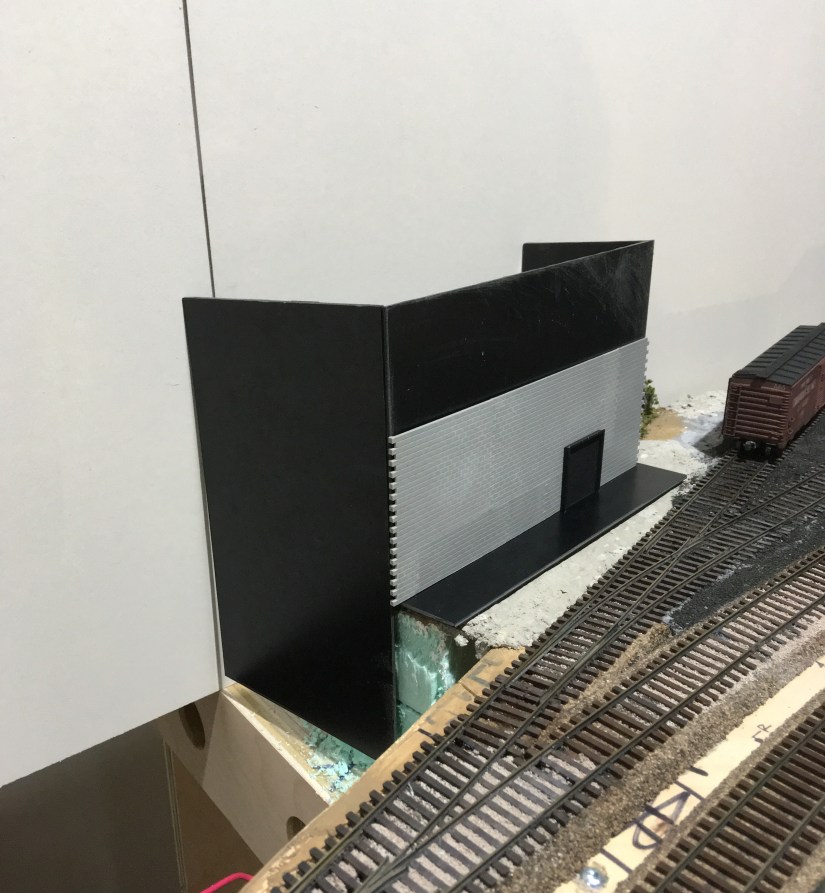
The Freight House

This part of the Ilchester railroad infrastructure seems to be fairly short-lived, it was around in my era of 1950, and very camera shy. It appears in parts in only a few photos I can find after years of searching. It is the raised Freight House on the left side of the photo, railroad east of the station. The B&O always ran east to west and always had a north side and south side of the tracks, regardless of what a compass indicated. On the B&O, Washington, DC was not south of Baltimore, but west.

August, 1952 photo of Ilchester Station and Freight House, B&ORRHS Photo Collection.

This might be the best picture that exists and it appears to be from August 1952 according to one caption. The board and batten siding and peaked roof are not things found on many eastern B&O structures.

My guess is that this station, its freight house, and coal trestle were originally built to serve the local community. Baltimore had some of the earliest “suburbs” in the nation. Areas like Roland Park were built in the 1890s and even had one of the first shopping centers. It was served by street cars and I suspect it served as a model for future possibilities. Pure conjecture, but early photos of Ilchester show long wood passenger platforms on both sides of the rail along with the coal trestle that could serve local coal deliveries. I wonder if the B&O thought Ilchester could become the next suburb served by passenger trains into the city? The station and infrastructure were built after the 1903-05 realignment, maybe adding the station was hoped to serve more than the boarding school or convent on the top the hill behind the station. The history of this area is not well documented and the effort of several modelers have served to add to the knowledge base. County historians look to fellow B&O modeler John Teichmoeller for definitive information about this community.

Photograph origin unknown.
Ilchester, MD 1941. Herb Harwood Photograph, B&ORRHS Collection.

How to model this elusive freight structure? Photos show board and batten siding and the building on a raised platform. The overhead view shows a peaked roof structure about 1/4 the length of the station and half its width. Their are standard B&O plans for a 16’x 20′ freight house, so maybe that size is appropriate. I know modelers build on less information and this may be all I ever find, so that’s what I am going with. On the up side, as soon as I complete the structure we all know a new photo will turn up. If so, at least the historical record can be set straight and I’ll have another structure to build.

There is a similar freight house at Dickerson, MD on the Metropolitan Subdivision and I used photos of it to supplement the photos of Illchester I found.

Dickerson Freight House and Station on the Metropolitan Branch. Underwood Photograph, Barriger Collecion.

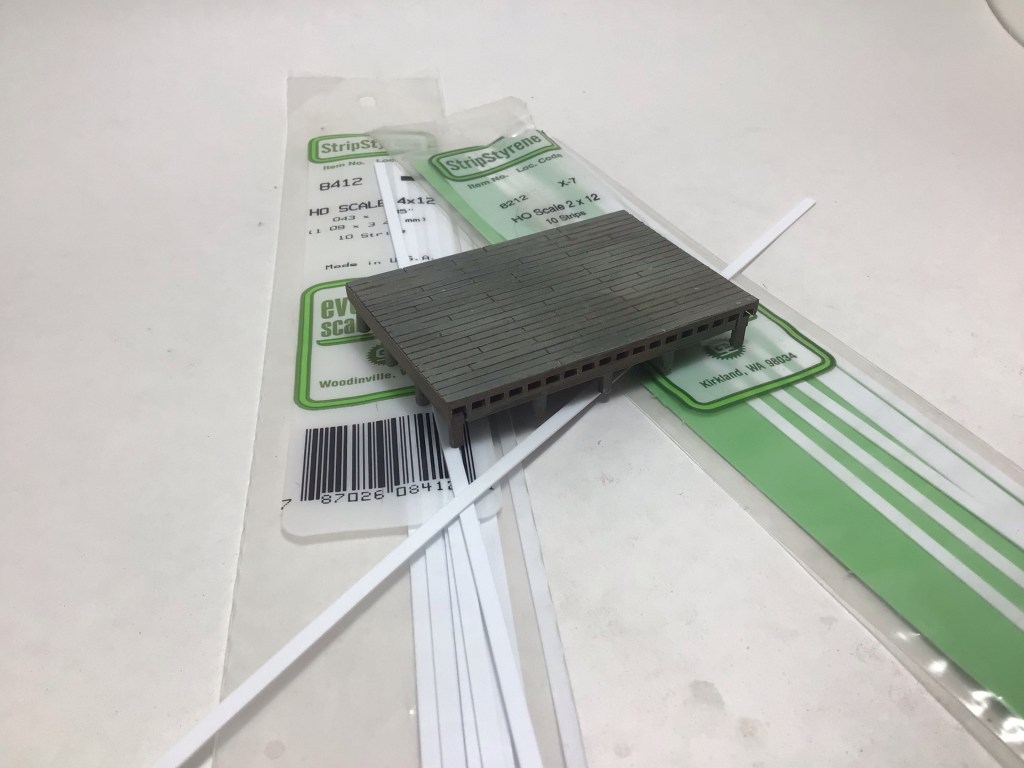
Using the rough dimensions from the overhead photo, I constructed the 15’ x 24’ raised wood platform from an old plastic kit from an unknown manufacturer. It was very close to the construction and dimensions of the platform in the standard B&O plans book available from the B&O Railroad Historical Society. The plastic kit was supplemented with scale Evergreen “lumber” to enclose the lower part of the structure which was painted a dark grey/black brown.

The platform from a very old kit, and Evergreen dimensional “boards” to enclose the platform.

The steps were from an old Campbell kit, but these are easy to replicate with styrene or scale lumber. They were painted the same color as the platform.

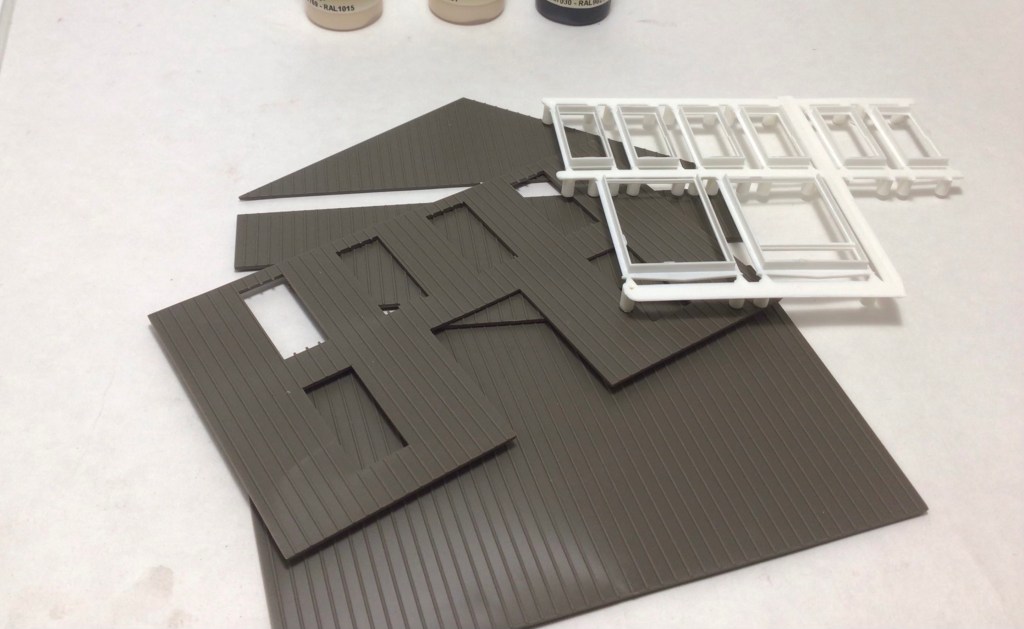
For the structure, I found another very old kit at a train show that had lots of board and batten sided parts along with a bunch of windows and doors for future projects. It took a while, but it’s always good to have something inexpensive to find at a train show or new hobby shop.

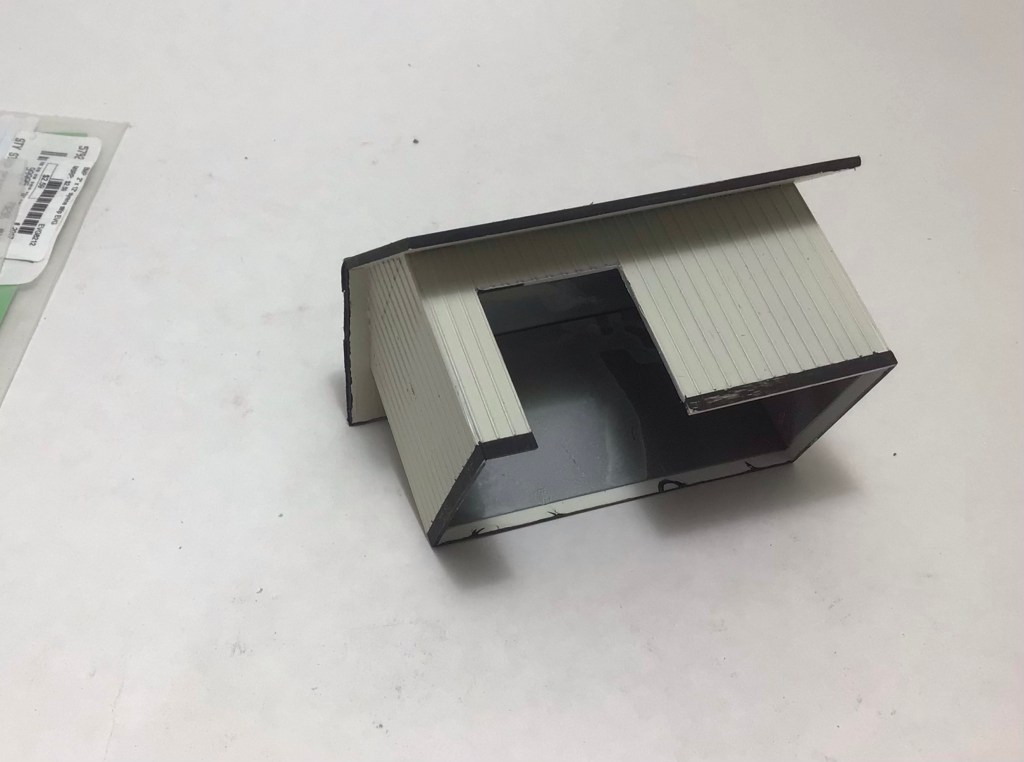
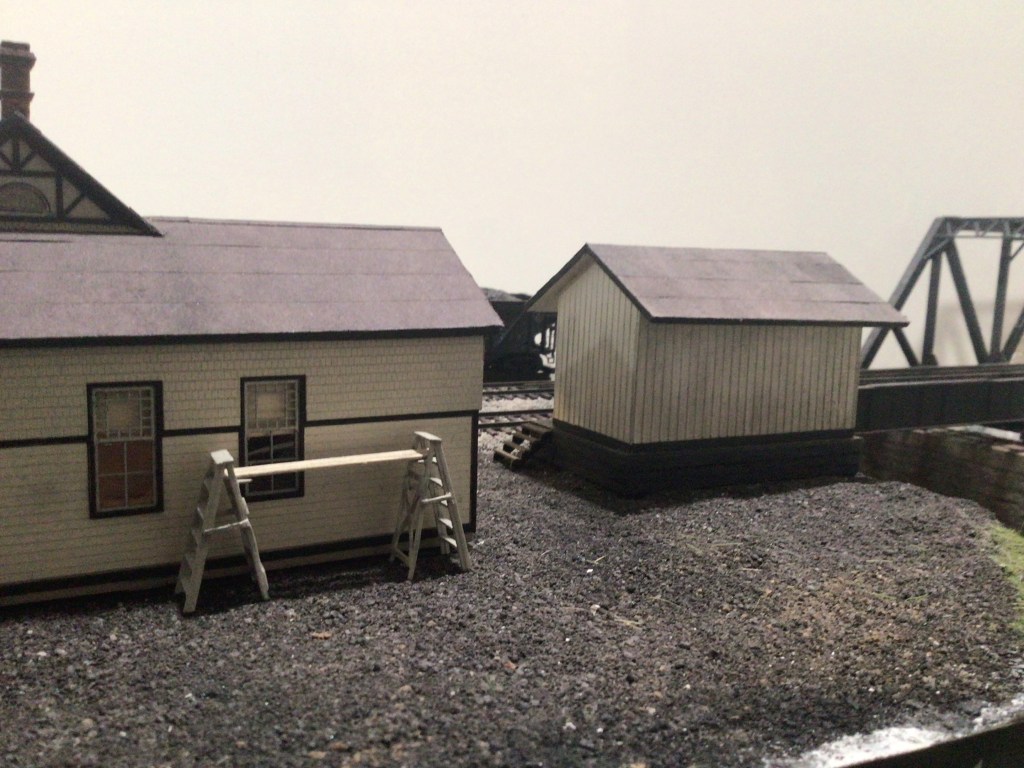
I cut the siding pieces to create 23’ x 12’ structure with a 8’ x 8’ opening for the door. The door is Evergreen styrene scribed siding painted the same black as the trim. The roof is .060 Evergreen styrene and I matched the roof pitch of the station building to mimic the photographs. The base trim boards are Evergreen styrene strips.

The roof is .060 styrene with the edges painted black to represent the trim boards.

The roof was covered with faded black construction paper to simulate tar paper roofing.

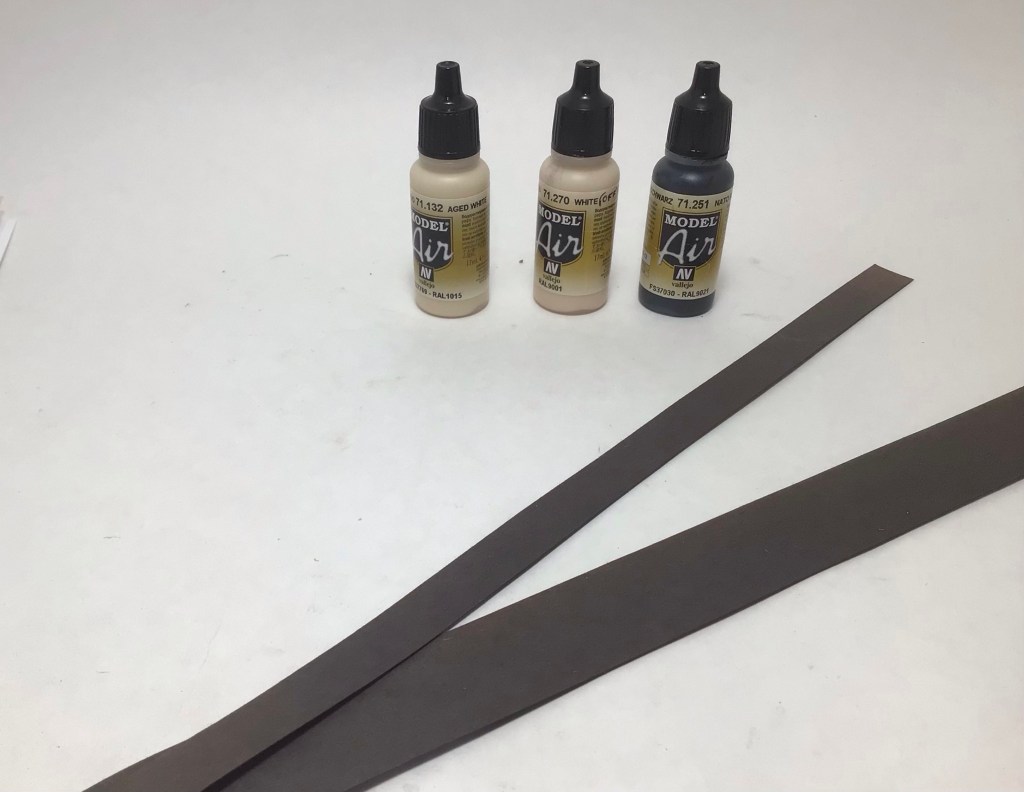
I used the same paint colors as those on the station for my rendition of the Cream and Black colors I remember seeing on old structures painted in this combination. It also matches favorably the Cream color shown on a 1939 paint chip card I received in an email some years ago. To match it, I airbrushed Vallejo Model Air 71.270 White (it is not a pure white) mixed with 10 drops of Vallejo Model Air 71.244 Sand Beige added to the almost full bottle. For the Black trim I used Vallejo Model Air 71.251NATO Black, it is a weathered flat black that has a slight brown hue that matches my recollection of the color.

Looking across the mainline tracks at Ilchester from the north.
The back of Ilchester Station and Freight House looking north from the parking lot.
I added the freight agent as he appeared in the first photo of this post. Detailing the figure was covered in an earlier blog post.

Enter your email address to subscribe to this blog and receive notifications of new posts by email.

Ilchester, Maryland, Part Three; Building the Model of the B&O Station.

I have recounted the background of the development of the MJB Models kit for Ilchester, now I offer an overview of constructing the model for my era. The blog that recounts the background research is at, https://bomodeling.com/2018/12/04/ilchester-maryland-part-one-the-bo-station/. The kit was a gift from my friend Don Barnes, so I don’t know the price, but it was not inexpensive and the quality is reflected in the well thought out design by Mark Bandy. This model represents a signature structure on this part of the Old Main Line and instantly recognizable to those that follow this part of the B&O.

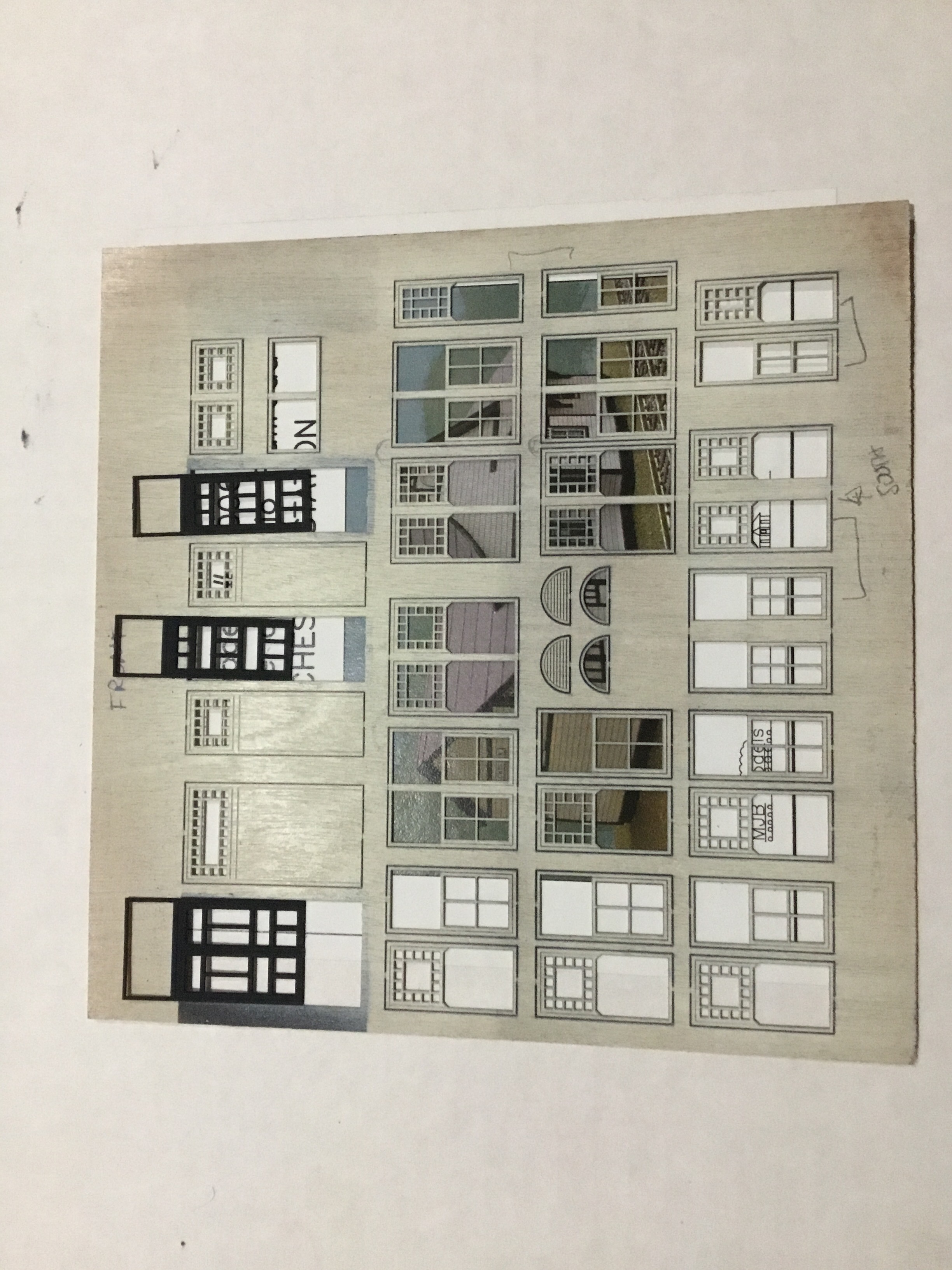
The instructions for this kit are pretty straightforward and consist of numbered and lettered parts diagrams for each sheet of laser cut parts and then a series of exploded diagrams of the construction process. They are more than adequate to build a great model. However, the walls are created by layering-on parts to create built up subassemblies of multi-part windows, multi-parts doors, and various sidings so it pays to test fit twice and glue once. I am sure this was done to allow the model to be painted prior to assembly, thus allowing a great rendition of a detailed two color paint scheme. My challenge was to do the kit justice.

Unlocking which color to paint which parts prior to assembly was the most difficult part of the project. And related to that, which paint colors to use to duplicate the colors of a particular era. The early 1960s photo below is a good rendition of the Cream and Black colors I remember seeing on old structures painted in this combination. It also matches favorably the Cream color shown on the 1939 paint chip card I received in an email some years ago. To match it I airbrushed Vallejo Model Air 71.270 White (it is not a pure white) with 10 drops of Vallejo Model Air 71.244 Sand Beige added to the almost full bottle. For the Black trim I used Vallejo Model Air 71.251NATO Black, it is a weathered flat black that has a slight brown hue that matches my recollection of the color. Though somewhat subjective, it is what I have chosen.

Source Unknown
1939 B&O Standard Paint for Storehouse Buildings, Etc. G.S.K. C-239. Source Unknown.

While the literature indicates the primary color of a station in my era is Cream, I often see B&O models painted the darker buff color. I always remember a light color, such as shown in the preceding photo taken sometime after 1950 and before 1970 when the station no longer appears in photos of the area.

The first question to answer in building the kit was on which sheets does one paint which color. The photos below will help someone building thIs kit.

Top shingle and lower siding pieces are all Cream.
The window frames and doors are Cream, except a few door overlays which are black.
Most of these underlaying pieces are black with the exception of the detail on the trackside lattice additions to the roof supports.

The kit’s parts are well cut and it only takes a slight trim with a razor blade to free them for their laser-cut sheets. I refrained from cutting the parts out until I could paint them to help them resist curling from the application of paint. I don’t know if it would have happened, but I thought it was a good precaution. I glued the basic frame together with sparing amounts of yellow wood glue and clear coated them. I did this long before I looked at the rest of the kit as I needed a mock up of the station for layout planning purposes. As seen in the photo below it was a pretty solid foundational structure and a perfect stand-in structure for the finished product.

The basic structure, later to be painted a light concrete color in the lowest 1/8 inch and Cream on the gables. The roof undersides were also painted Cream.

I started building the kit a little out of order from the instruction sheets as I wanted to start on the side hidden from normal viewing on my layout, the trackside. I assembled one door and window on the north side, west end. The window and door attach behind that black painted intermediate piece that is covered by the adhesive shingle sheet on top and the siding piece inset on the lower portion. I added the vinyl glazing supplied with the kit, but cut it to window size and used canopy glue instead of the supplied double sided tape as the space was too small for much tape to bite. The glazing has to no wider than the door or window to fit within the cutout of the basic structure assembled first.
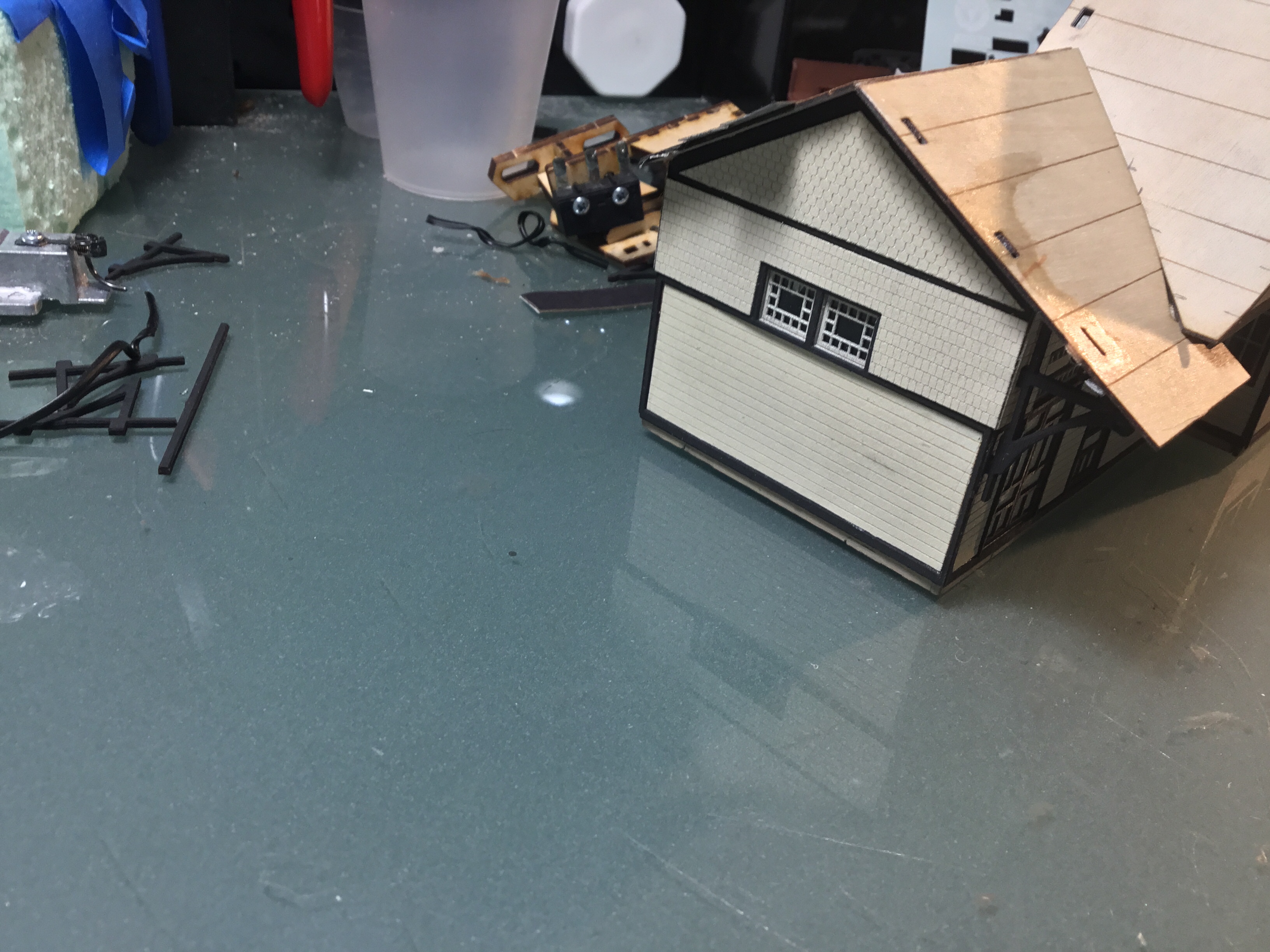
North side (trackside), west end of the structure. (The upper shingles and siding are a little off, but not glued yet)

The pieces fit precisely, so before I glued this piece to the basic structure I started building the other window, door, trim, shingle pieces. I wanted to be sure my building techniques were as precise as the laser cutting. I was close. I left the edge trim pieces unglued where they met the next wall to allow the corners to be glued together. These are black trim pieces and they look better as precisely matched as possible.

The north end pieces and roof aren’t glued yet, the kit is starting to look the part.

I don’t remember ever building a structure kit that went together this well. I took my time with each step and test fitted every piece before letting it set overnight and then I came back to glue it the next day. I set it up on a different table and just did one step a night. It was hard not to rush, but the kit deserved this level of attention.

Progression on the kit went well as you can see it coming together. I repeated the steps for each side and it everything fit as expected. I was sparing with the glue and test fitted parts multiple times. The adhesive-backed, laser-cut parts fit very well, but there was not much dwell time. When you place an overlay part in place it didn’t take long for it to be very strongly adhered.

1964, B&ORRHS Collection
The adhesive backed tarpaper roofing has the right look and adheres well.

Interior walls seem to be front to back (north to south) as one can see through from the trackside out the backside windows in period photos. Speculation would put the passenger waiting room on the west end with a door for in and out on the trackside. Passenger trains had been discontinued on the OML in 1949. There are no doors on the south side away from the track. The center portion of the station would probably be occupied by the station agent’s office and the east end a small freight storage area. This was apparently supplemented by the separate freight house to the east (a future blog post).

The south side windows are visible through the station in this period photo. A pendant light fixture without a shade is visible in the center of the photo. I modeled it with a shade matching the ones at the east and west ends of the station.

The interior walls were constructed from scrap styrene as the interior is not detailed, but I wanted someone looking very close to see the separation and I wanted to add some lighting to the center freight agent’s office. Looking at lighting in photos in a previous blog I noticed three shaded exterior lights on the trackside of the building. I turned to Woodland Scenics products as I have success with them lighting the Point of Rocks station. The HO scale lamps seemed a little oversized so I used the N scale JP5658 Gooseneck Wall Mount Lights for the exterior pendant lights and one JP5740 Warm White LED Stick-On Light for the freight agent’s office overhead light. These were all connected to a Woodland Scenics JP5701 Light Hub under the layout. The next photo shows my less than neat wiring, my goal was to make sure the wires were secure and out of sight inside the structure and could be installed without drilling holes in the model.

This simple styrene base allows me to blend the model into the scenery. The raised portion fits the opening in the passenger waiting room floor of the structure and allows me to align the model on the base. The hole allows the lighting wires to connect to power source below the layout.

Before the roof sections are installed, I added one final detail to the interior, the windows in period photos show window blinds. Take a look at the prototype photos in the previous blog referenced earlier. I added these with trimmed pieces of manila folder, cut slightly wider than the windows to give them a slight offset and not appear glued to the window “glass”.

Interior walls are visible (white styrene) along with wiring for exterior lights.
The location of the three exterior lights are visible here and their appropriate size is apparent. This is a test fit of the roof and supports.

The roof intersections have some unusual angles that I would have trouble creating in 1:1 scale, so slight trims and test fits helped me get them very close and then use the roofing material to close the gaps. The tarpaper roofing material supplied is excellent and guidelines for installation are lightly laser-cut into the roof sections. A slight overhang of the tarpaper was needed to cover the facia boards that are added near the end of construction.

The final facia trim work adds the finishing touch. There are some precut pieces that are too short, but this is easy correct by trimming some extra boards from the sheet the trim is cut from and blending them in with canopy glue and NATO black paint.

Gluing the last and most difficult roof section.

Currently MJB Models is not producing kits and Mark’s website is dormant. But if you ever want to build an excellent kit, please try one of his products. As I built it, my only trepidation was putting in as good an effort into building it as he had put into engineering and producing the kit. This is not a slight to anyone and I love building Al Westerfield’s older kits, this is on par or might even exceed that level of design and detail, though in a structure.

Completed, but still on the workbench.
On the layout looking from the west.
Another view from the west.
Looking back at the station from the east on the hill across the Patapsco River.

Enter your email address to subscribe to this blog and receive notifications of new posts by email.