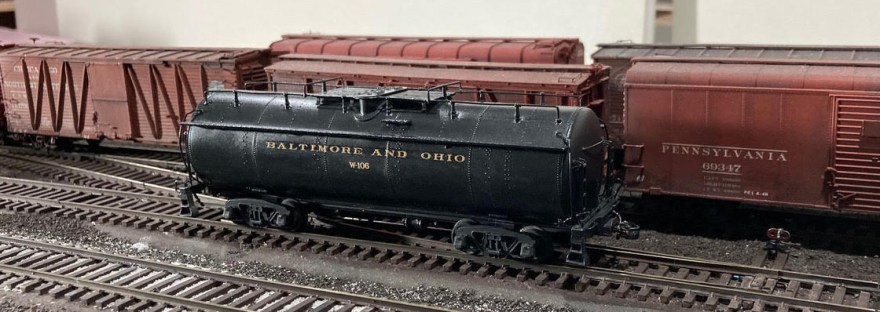
The more I researched the trains that ran on the Old Main Line (OML) in 1950, the more I realized that the mainline freight trains on the Baltimore Division were almost completely steam-powered during that time. My early assumption was that newer diesel engines carried through freights to Philly through Baltimore from Brunswick, MD. But evidence suggests that the fast freight’s runs from Brunswick through to Philly to were overnight trains with steam at the lead. Mainly Q-4 Mikes, presumably with an extra water tender, called a “Water Bottle” on the B&O.
While I still hope to find evidence of B&O FT units and other early diesels running down the OML in 1950, I am refocusing my engine roster to include more B&O Q-4 class steam locomotives and some water bottles.
Recently, I found an HO scale Samsonga Water Bottle online for a reasonable price. The trucks were not correct and neither was the lettering. The size of the lettering height was shorter after about 1940 and the trucks were heavier-duty with leaf spring packages.
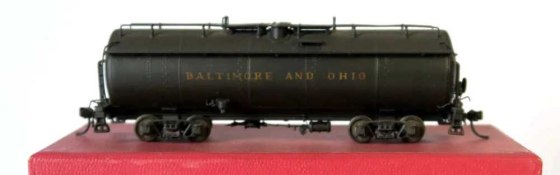
For the correct decals, I relied on B&O S Scale modeler Ed Sauers’ B&O Steam Locomotive decal sheet that includes the lettering for Water Bottles. It is the most accurate available. Ed developed this decal set himself in several scales and he is an excellent source of information about brass modeling in all scales. Ed’s decals can be purchased through another B&O modeler, Bill Hanley at wmhanley at verizon dot net. Send him a message and he can give you purchasing information for the steam locomotive set and several other decals sets that Ed has developed.
And for the correct trucks, I replaced the Kadee Andrews trucks with Precision Scale #31651 Leaf Spring Andrews Trucks. These were a kit, so some drilling of the journals to fit the wheels and soldering of the bolster to the sideframes was required. At least they won’t come loose like some brass trucks that are screwed together.
I stripped the black paint and clear lacquer finish from the Water Bottle with ScaleCoat II Wash Away Paint Stripper/Remover for Plastics. I repainted it first with Tamiya Gray Fine Surface Primer L, then Vallejo Model Air 71.251 NATO Black, and finally a coat of “Pledge” clear floor finish for a gloss decaling surface.
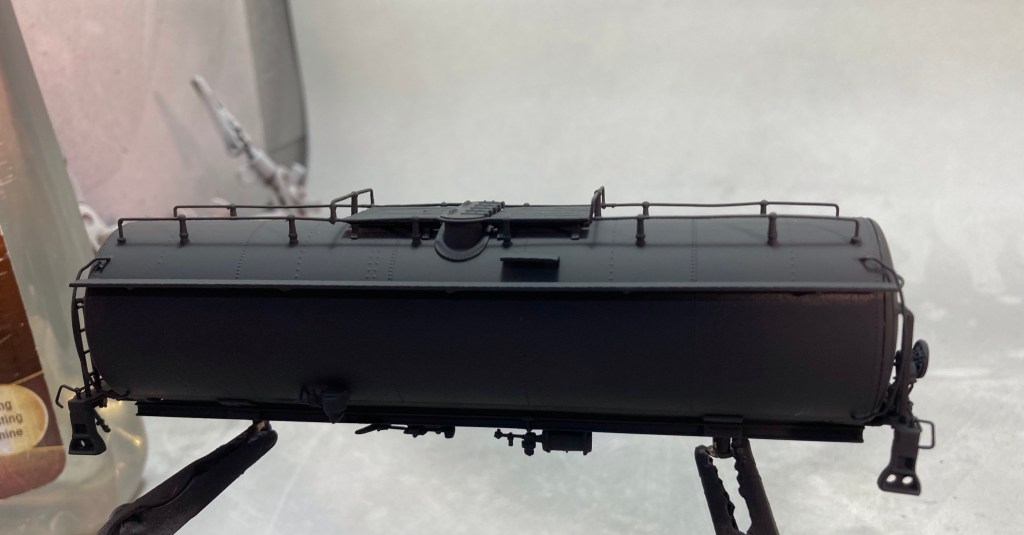
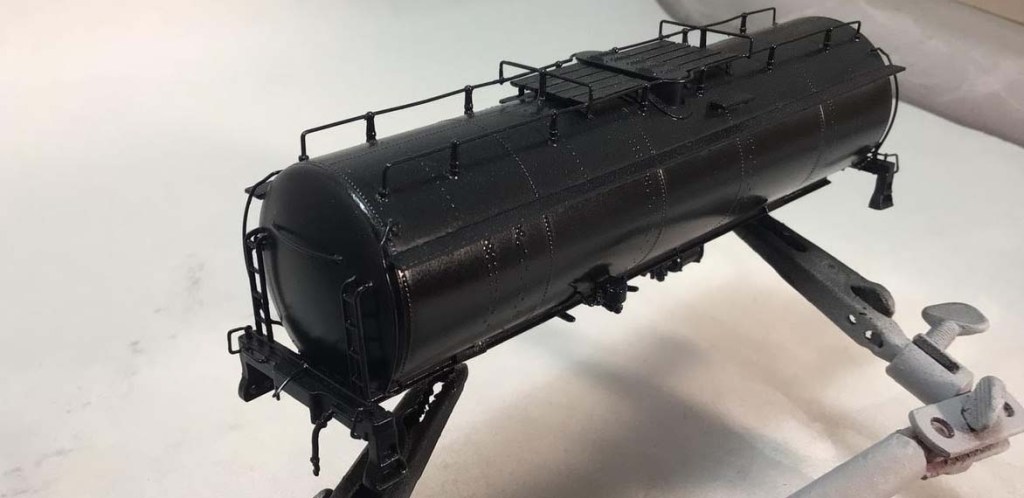
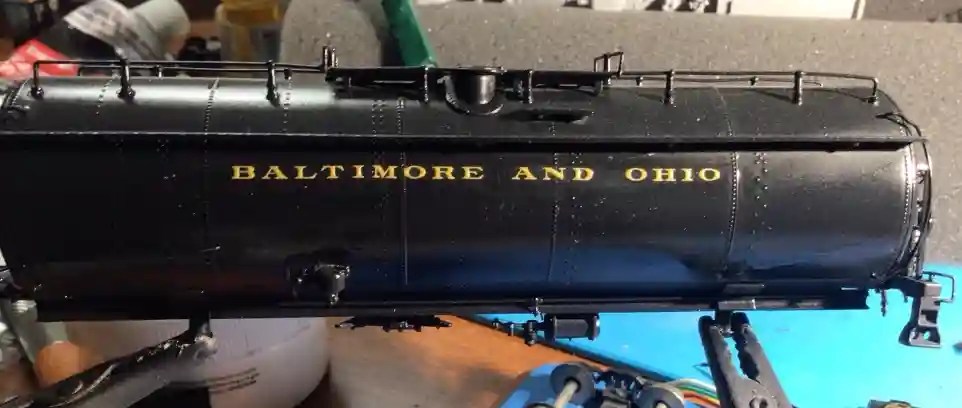
My Q-4 Mikado #4620 will fill in for Q-7f #4844 when it is being serviced and as one of the lead locomotives on fast freight runs from Brunswick to Philiadelphia and back every night and when running late appear early in the morning. In that latter role, it will have this Water Bottle, W-106, added to save water stops in order to meet the tight schedules for the fast frieghts to Philly.
According to the Q Book (Q The Definitive History of the Baltimore and Ohio Railroad Company’s Q-Class Mikado Locomotives by Howard N. Barr and William A. Barringer) Water Bottle W-106 was an “18,500-gallon auxiliary tank converted from (a) Q-4/4b tender.” Its weight fully loaded was 230,000 pounds and it rode on B&O “No. 52A” trucks. I don’t think anyone has found the key to the B&O truck numbering system.
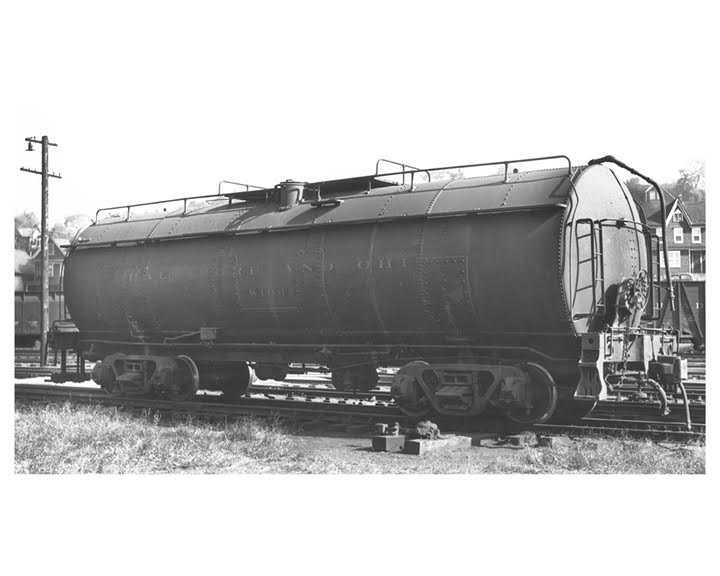
I would certianly like to have a second Water Bottle to run with a second Q-4b that I am working on currently. And I have seen several brass models just like W-106 for sale. The problem is that each Water Bottle seems to have been a unique creation. For example, in the Q Book information about W-107 indicates it was a “16,000 gallon auxiliary tank converted from (sic) S Tender.” And there is no accurate brass model for the W-107 available. This might be an opportunity to scratchbuild one or maybe I should learn CAD better, create a printable file, and have one 3d printed.
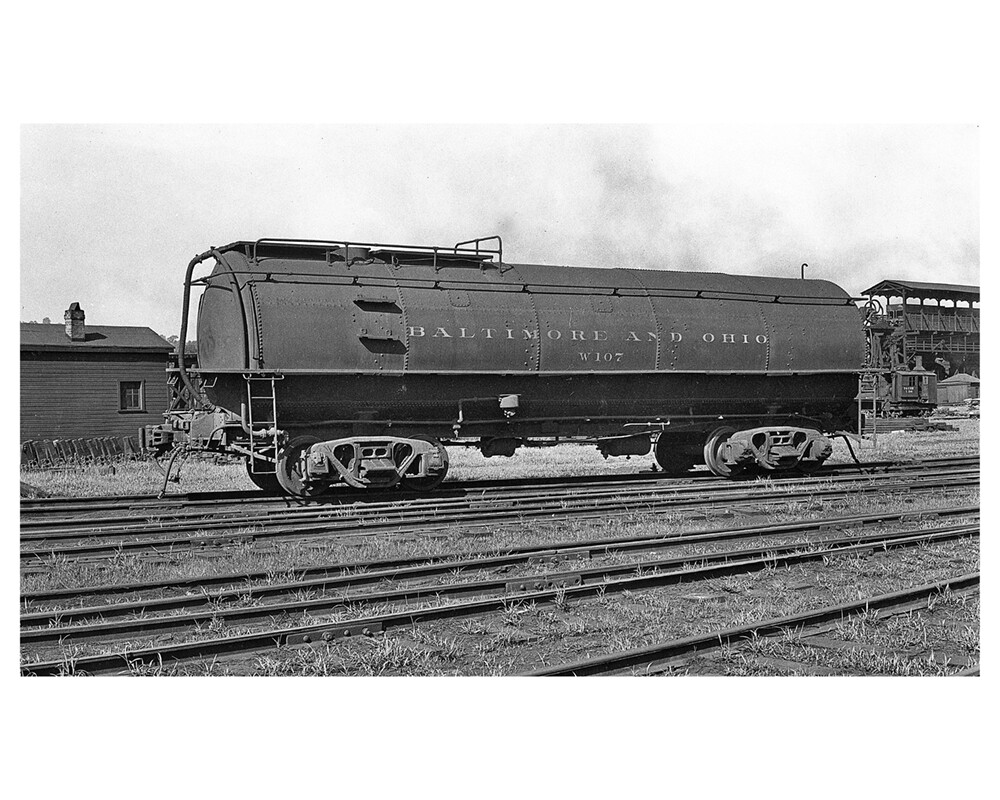

I have yet to weather the W-106, I will do it at the same time as I weather the Q-4b it will be paired with for fast freight service. If anyone wants to help out with creating a CAD drawing for the W-107, please contact me through the comments section. Thank you!
 B&O Modeling